
Outreach Materials
At the Barton Springs-Edwards Aquifer Conservation District, I coordinated outreach events and created educational materials that connected permit holders, well owners, and the broader community with local groundwater resources. Whether I was teaching kids about the endangered Barton Springs Salamander or designing resources like our well water testing guide, my goal stayed the same: make aquifers easy to understand and water conservation feel achievable for everyone.


Bart the Barton Springs Salamander is a character I brought to life in partnership with a graphic designer. Barton Springs Salamanders are endemic to Barton Springs Pool in Austin (which is within the District's territory) and are iconic in the Austin community. Bart was created to build awareness and connection with audiences of all ages, and has since appeared across the District's social media and on stickers, shirts, and bags for staff and community giveaways.
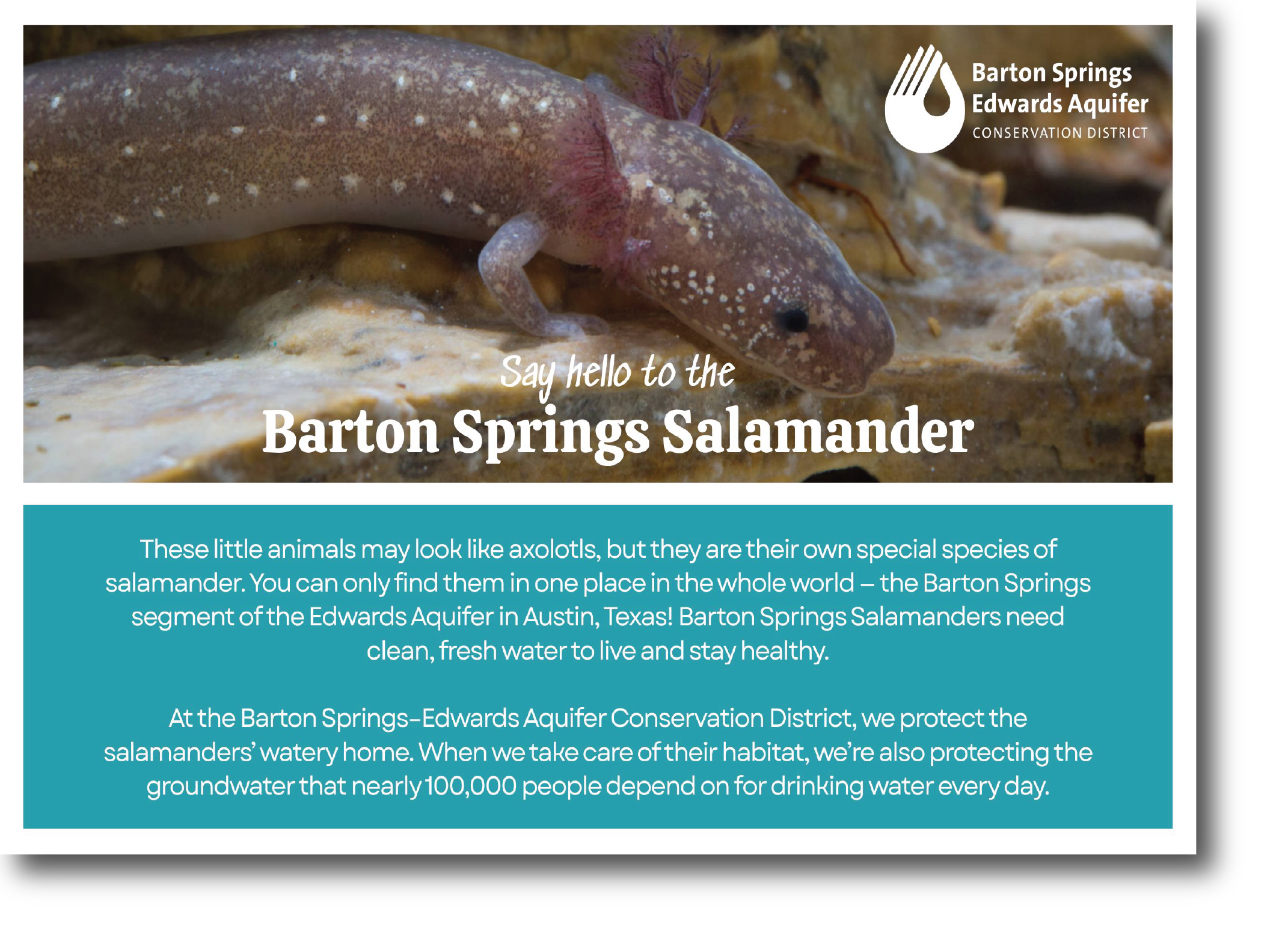
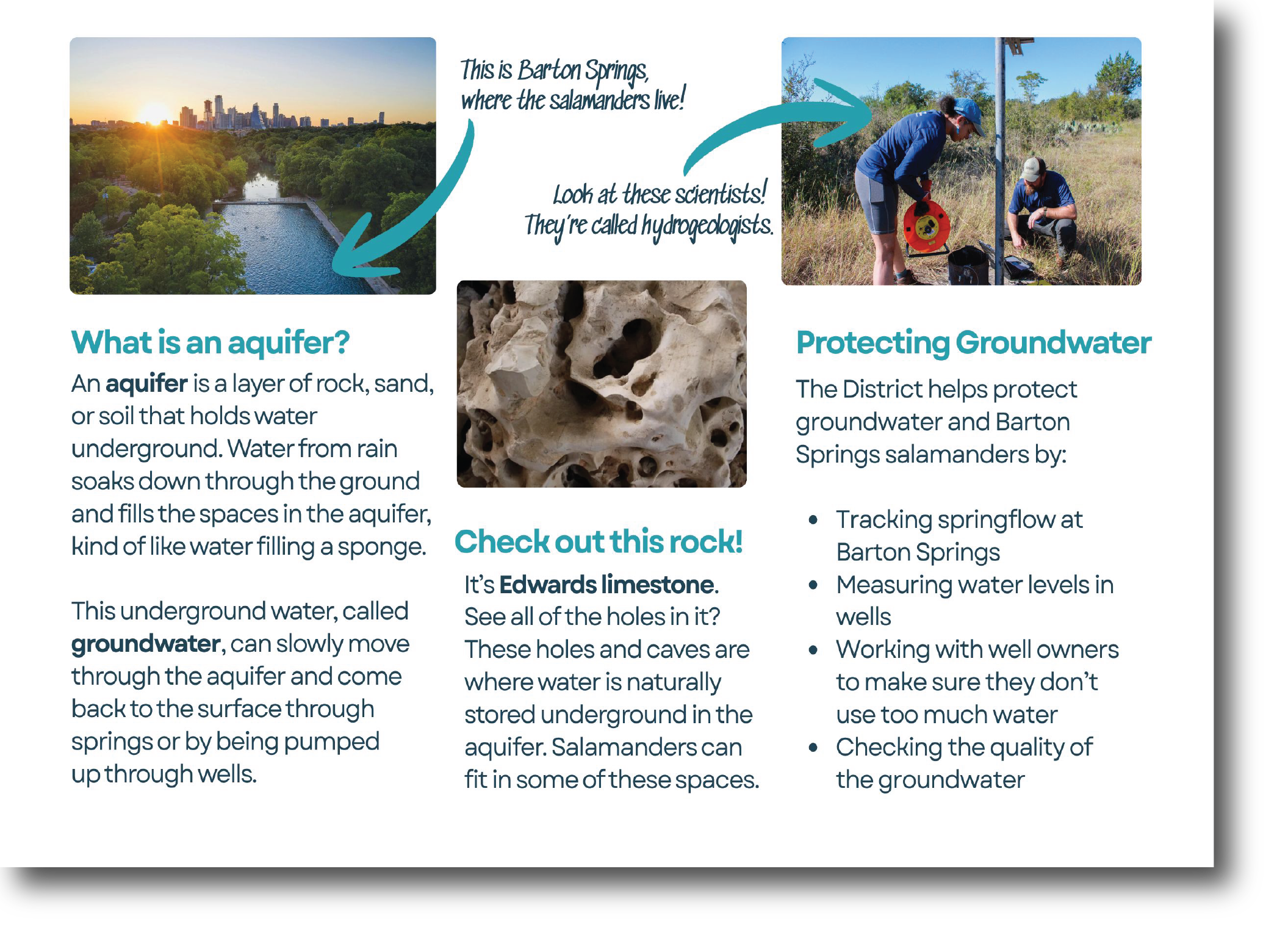
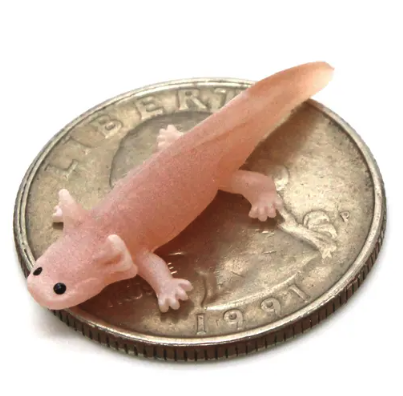
I designed these 5×7” postcards as an engaging educational resource for elementary students, distributing them following my outreach presentations about the District and our work protecting the endangered Barton Springs salamander. Each postcard was paired with a salamander figurine approximately the size of a two-month-old juvenile, which was a memorable takeaway that brought the science to life for young audiences.

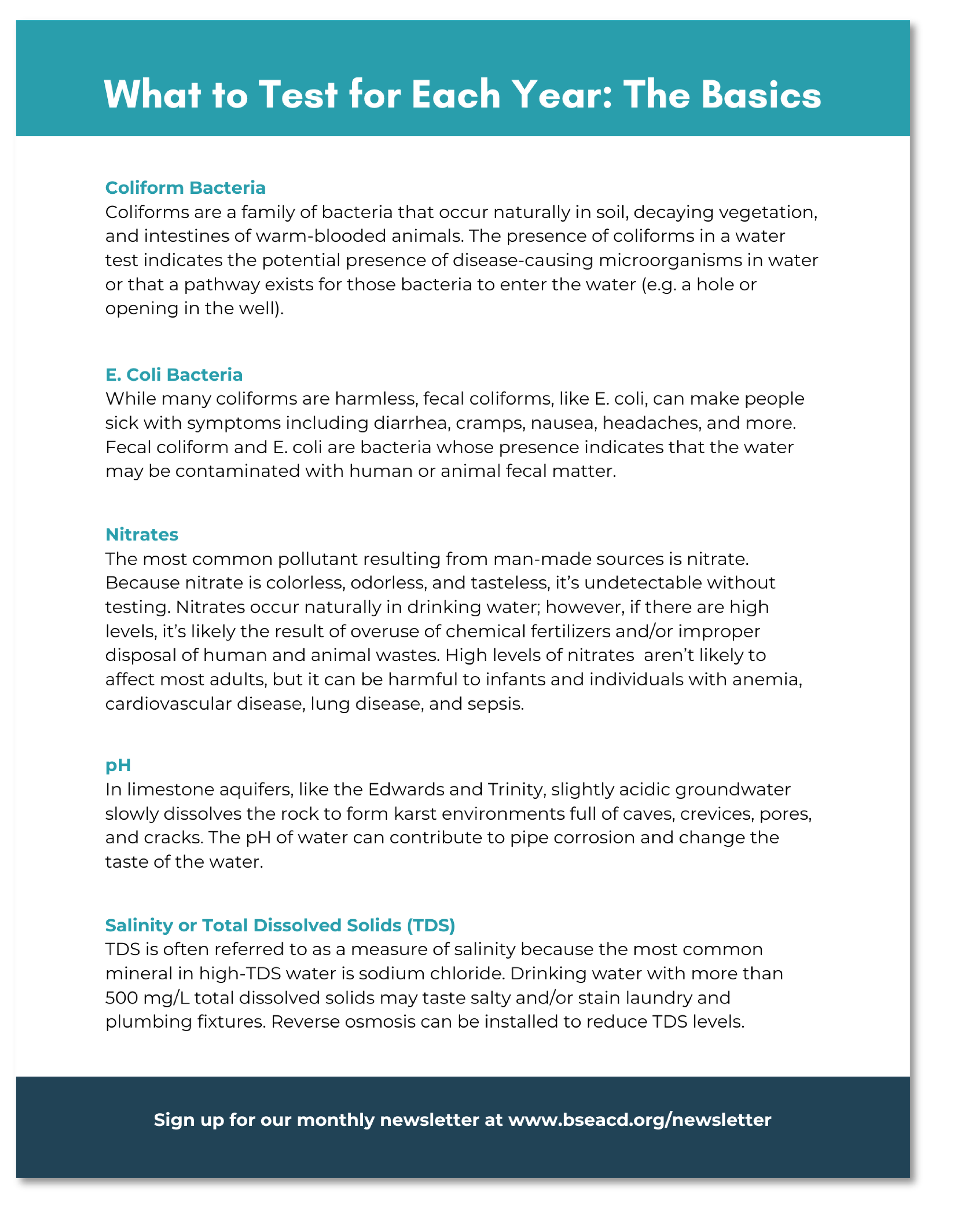
I designed this print and digital resource educating well owners on the importance of annual water testing and how to get it done. This was distributed year-round and at our Well Water Checkup events, which we co-hosted with the Texas A&M AgriLife Extension Office. Our outreach initiative helped connect over 100 well owners with water testing through the District.
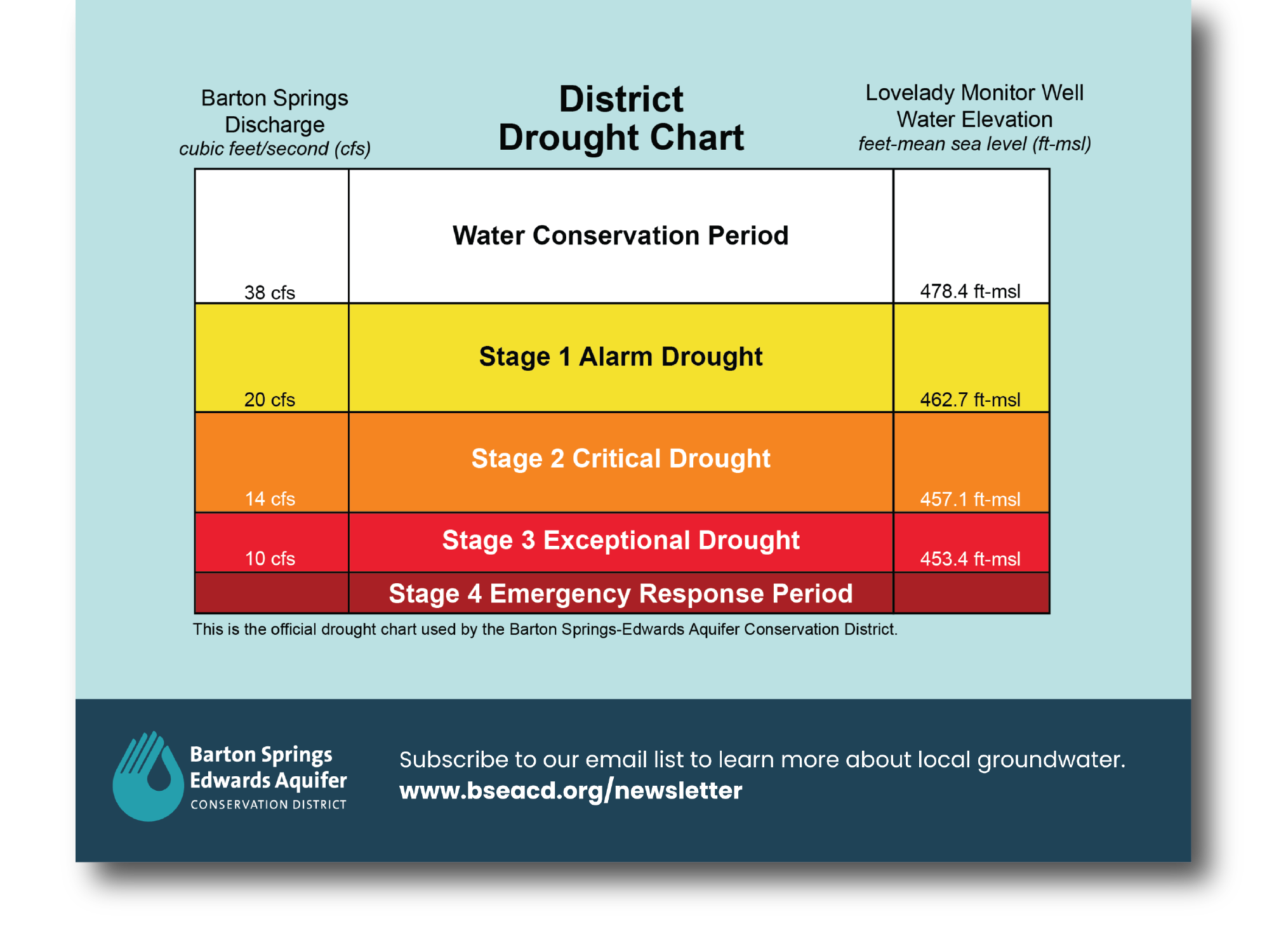
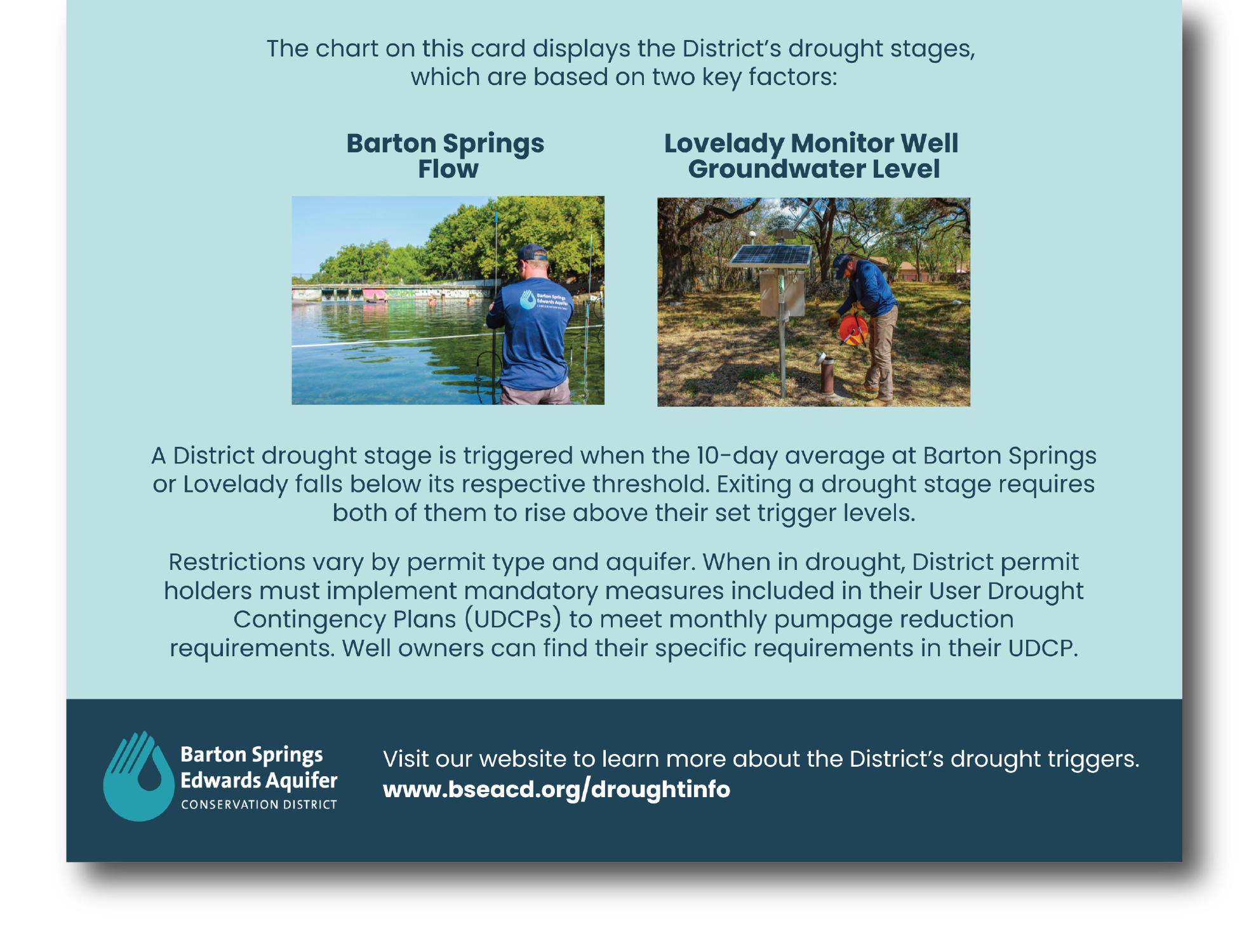
The District's drought chart and drought trigger methodology were important for audiences to understand, since each drought level directly impacted the amount of water permit holders could use. I led a significant update to the chart to make it more intuitive and easy to understand. This included revising the numbers, coloration, and naming structure. To further support community understanding of the chart and its triggers, I designed this companion 5×7" card, distributed by the District at the office, outreach events, and site visits, to help explain the science behind the drought trigger methodology.